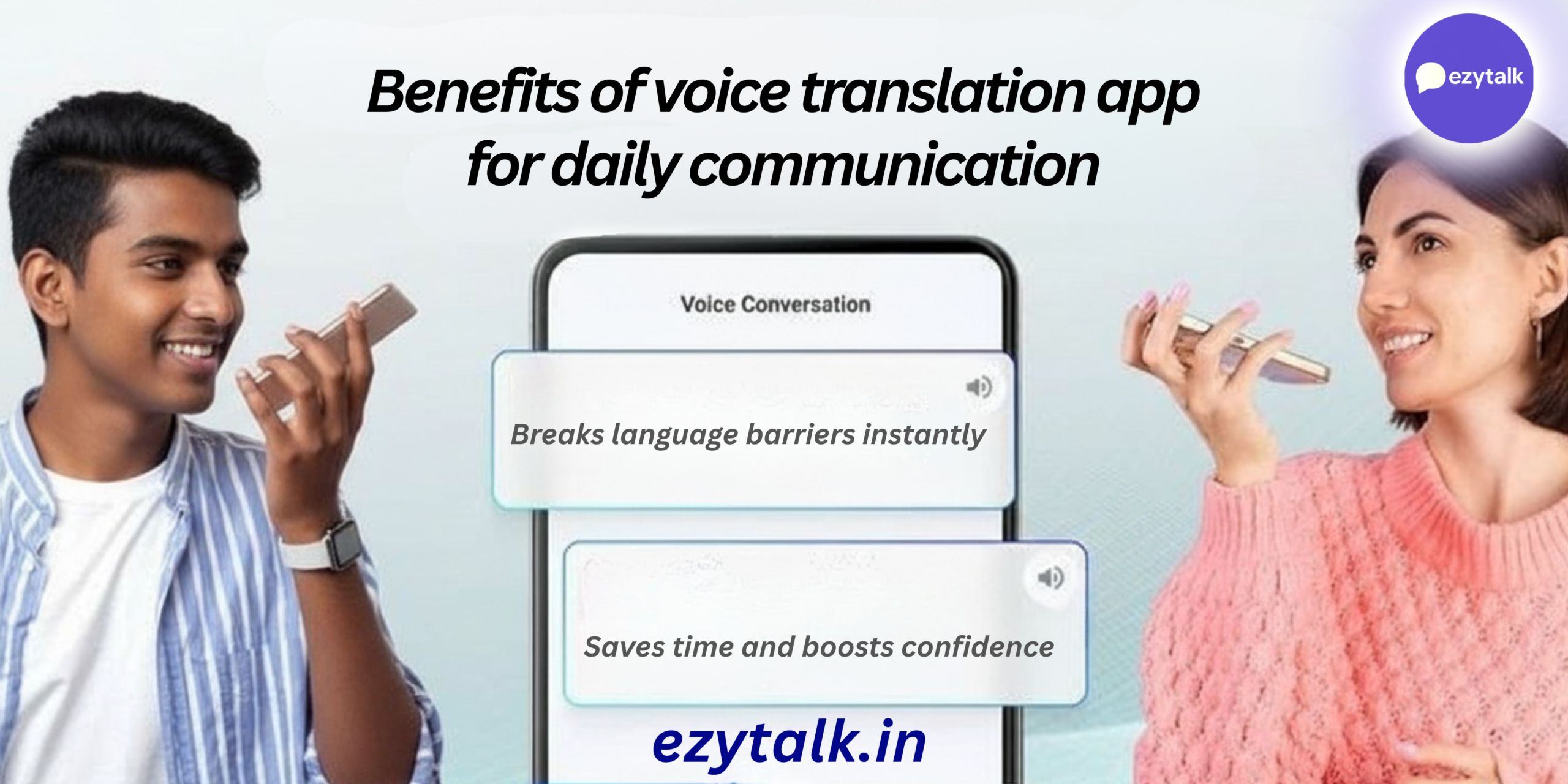
How voice translation apps work: In today’s connected world, people speak different languages yet want instant understanding, and a voice call translator, which allows one call in any language from anywhere, helps solve this challenge by converting spoken words from one language into another in real time. In simple terms, it listens, understands, translates, and speaks back, making communication seamless in travel, business, education, and daily interactions. Voice translation apps are designed to feel natural and easy. Because of that, users do not need technical knowledge. Instead, they just speak and listen. Moreover, these apps rely on advanced artificial intelligence to ensure accuracy and speed. As a result, communication becomes smoother and more confident across languages. How voice translation apps work To understand the process, it helps to break it into simple stages. Each stage plays an important role in delivering accurate translations. Voice capture and speech recognition First, the app captures the user’s voice through the microphone. Then, speech recognition technology converts spoken words into text. This step is crucial because clarity directly affects translation quality. Language processing and translation Once the text is ready, the system analyzes grammar and context. After that, it translates the text into the target language. This stage demonstrates how voice translation apps work using AI models trained on multiple languages. Voice output and playback Finally, the translated text is converted back into speech. The app then plays the audio in a clear and natural voice. Therefore, the conversation feels almost instant. Key features that make voice translation effective Voice translation apps include several helpful features that improve usability and trust: Because of these features, users feel comfortable using the app in daily life. For those looking for a reliable solution -Ezytalk. provides an excellent platform for seamless voice translation, bridging language barriers effectively. Why understanding the process matters Knowing how voice translation apps work helps users choose the right app and use it effectively. For example, travelers can communicate confidently, while professionals can join global meetings without hesitation. In addition, students benefit by learning pronunciation and sentence structure naturally. Furthermore, developers continue to improve accuracy through machine learning. Over time, this leads to better context awareness and fewer errors. As a result, voice translation becomes more reliable every year. The future of voice translation technology As AI evolves, the way people communicate will change rapidly. With better algorithms and faster processing, understanding how voice translation apps work becomes even more important. These apps are not just tools; they are bridges between cultures, languages, and people worldwide. By combining simplicity, speed, and intelligence, voice translation apps continue to reshape global communication.